Autonomy built for contested conditions
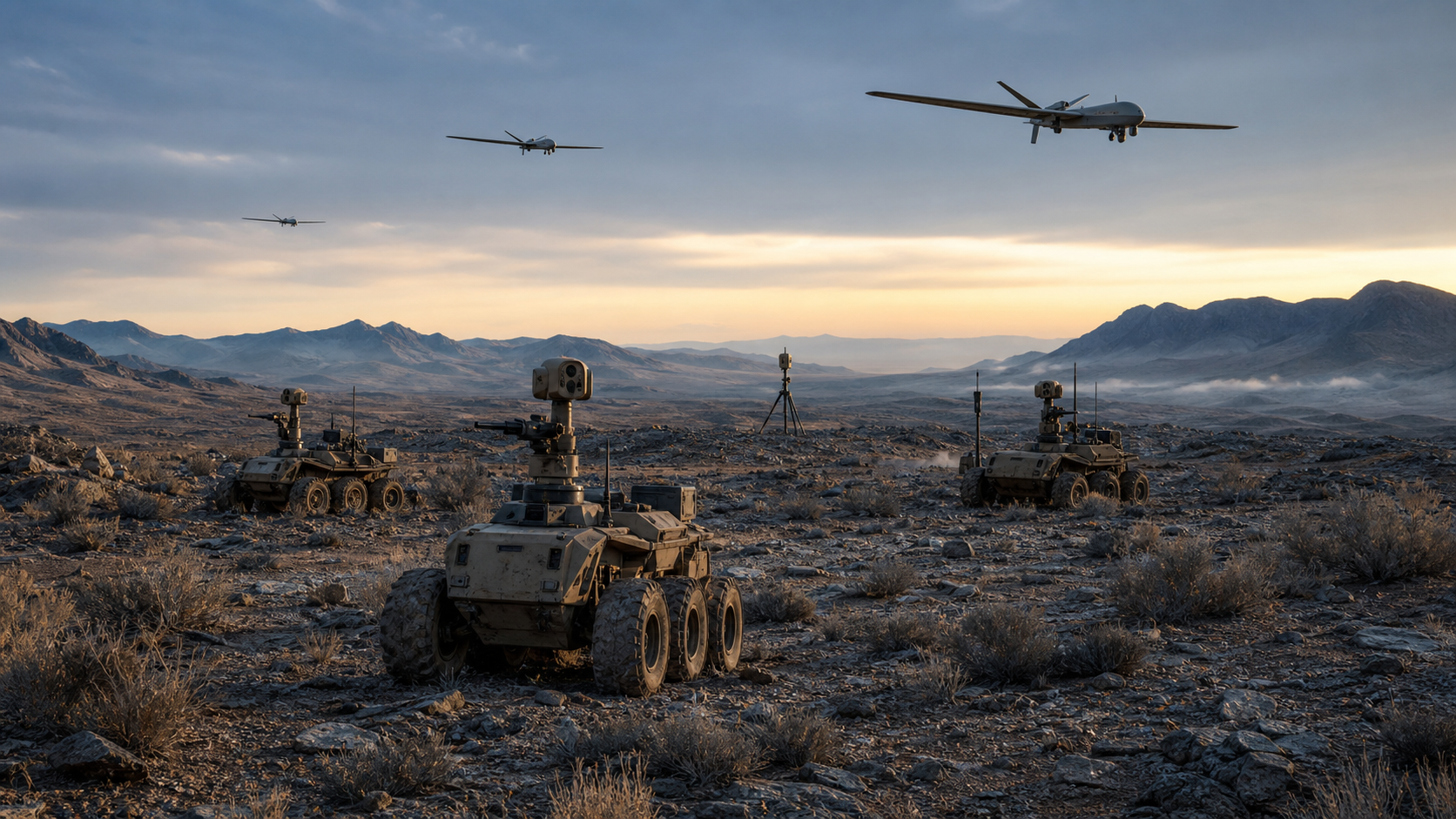
Operational autonomy must withstand uncertainty rather than depend on perfect connectivity. We design systems to maintain local awareness, prioritize mission objectives, and coordinate safely when access to cloud services, communications, navigation, or centralized control is disrupted.
Distributed sensing and coordinated action
Networks of air, ground, maritime, space, or software agents can extend awareness and create multiple pathways for mission execution. We explore multi-agent coordination, sensor fusion, edge processing, task allocation, and graceful degradation so a distributed system can continue providing value when individual nodes fail.
Assurance with meaningful human supervision
Autonomous capability must remain aligned with defined missions and authorities. We establish operating boundaries, human intervention mechanisms, system-health monitoring, testing protocols, and evidence for verification and validation. The goal is dependable autonomy that operators can understand, supervise, and employ responsibly.